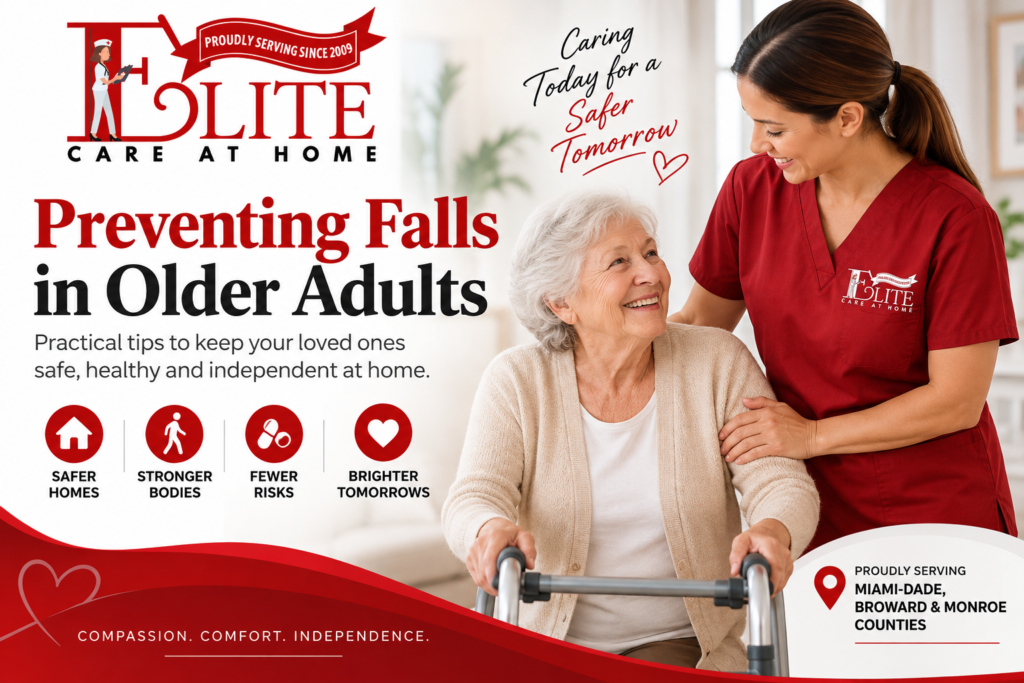
Preventing Falls in Older Adults: What Every Family Needs to Know
Falls are one of the most serious safety concerns for older adults. A single fall can lead to injury, hospitalization, reduced mobility, and loss of independence. Fortunately, families can take practical steps to make the home safer and reduce everyday fall risks.
At Elite Care At Home, we help seniors and families throughout Miami-Dade, Broward, and Monroe counties receive compassionate support in the comfort of home. Fall prevention is an important part of helping older adults remain safe, comfortable, and as independent as possible.
Why Fall Prevention for Seniors Is Important
Falls can affect much more than physical health. After experiencing a fall, some older adults become afraid of falling again and begin limiting their normal activities.
Reduced activity can gradually weaken muscles and affect balance, potentially creating an ongoing cycle of increased fall risk.
Families should therefore think about fall prevention before an accident happens. Improving home safety, reviewing medications, addressing health concerns, and maintaining appropriate physical activity can all contribute to a safer daily routine.
What Causes Falls in Older Adults?
Falls rarely have just one cause. Several physical, medical, environmental, and medication-related factors may contribute.
Physical and Medical Risk Factors
Common factors that can affect an older adult’s stability include:
- Muscle weakness, particularly in the legs and core
- Balance or walking difficulties
- Vision problems
- Dizziness or changes in blood pressure
- Dehydration
- Arthritis and mobility limitations
- Diabetes-related neuropathy
- Parkinson’s disease
- Previous stroke
- Heart and circulation problems
For seniors living in Miami and South Florida, hydration deserves additional attention because hot and humid weather can contribute to dehydration and dizziness.
Any new or unexplained dizziness, weakness, or balance problem should be discussed with a healthcare professional.
Can Medications Increase Fall Risk?
Some medications can cause side effects such as dizziness, drowsiness, confusion, or changes in blood pressure that may affect balance.
Taking several medications can make it more difficult to determine which medication or combination is contributing to a problem.
Families can ask a physician or pharmacist to conduct a medication review with fall prevention in mind.
Never stop or change a prescribed medication without consulting an appropriate healthcare professional.
How to Make a Senior’s Home Safer
Many fall hazards are found in places a senior uses every day.
Loose rugs, poor lighting, electrical cords, cluttered pathways, slippery tile, wet bathrooms, and unsecured stairs can turn an otherwise familiar home into a dangerous environment.
A room-by-room safety inspection is an excellent place to start.
Bathroom Fall Prevention
Bathrooms deserve special attention because water and smooth surfaces can make slipping more likely.
Consider:
- Installing secure grab bars near the toilet and shower
- Using non-slip surfaces in and around the shower
- Adding a shower chair or bath bench when appropriate
- Using a handheld showerhead
- Keeping frequently used toiletries within easy reach
- Adding nighttime lighting between the bedroom and bathroom
Grab bars should be properly installed and designed to support a person’s weight. A towel bar should not be used as a substitute.
Bedroom Safety for Older Adults
A safer bedroom can reduce the risks associated with getting out of bed, particularly at night.
Keep walking paths free of clutter and make sure a lamp or light switch is easy to reach from the bed.
Loose rugs should be removed or securely fastened. Frequently used items and a phone should also be kept within comfortable reach.
For seniors who experience dizziness after standing, sitting briefly on the edge of the bed before getting up may help. Repeated or unexplained dizziness should be reported to a healthcare professional.
Living Rooms, Hallways and Outdoor Areas
Walk through the home and look at it from the perspective of someone with limited mobility or vision.
Remove unnecessary obstacles and make sure:
- Electrical cords stay away from walking paths
- Rugs are removed or properly secured
- Hallways are well lit
- Stairways have sturdy handrails
- Furniture leaves sufficient walking space
- Outdoor steps have secure footing
- Patios and pool areas are kept as dry and slip-resistant as possible
These precautions can be particularly useful in South Florida homes where tile, terrazzo, patios, and pool areas are common.
Choose Safer Footwear
Something as simple as footwear can make a meaningful difference in everyday stability.
Older adults should avoid walking in socks on smooth tile or other slippery flooring. Properly fitting shoes with supportive, non-slip soles are generally a safer choice.
Seniors experiencing neuropathy, diabetes-related foot problems, pain, or changes in foot shape should discuss footwear with their healthcare provider or podiatrist.
Exercise and Balance Training for Seniors
Appropriate physical activity can help maintain the strength, flexibility, coordination, and balance needed for everyday movement.
Depending on the senior’s health and mobility, activities may include:
- Chair yoga
- Gentle stretching
- Tai Chi
- Balance exercises
- Light resistance or strength exercises
- Walking on safe surfaces
- Physical therapy
Older adults who have already experienced a fall, have significant balance difficulties, or live with medical conditions should speak with an appropriate healthcare professional before beginning a new exercise program.
A physical therapist may also be able to develop an individualized program based on the person’s mobility and fall-risk factors.
Medical Care Can Help Identify Fall Risks
Regular medical appointments can uncover issues that families may not notice at home.
Important areas to discuss with healthcare providers include:
Vision
Changes in eyesight can make it harder to recognize obstacles, judge distances, and navigate unfamiliar environments.
Hearing
Hearing problems can affect environmental awareness and may contribute to difficulties navigating surroundings.
Medication Review
Ask a doctor or pharmacist whether any medications or combinations could contribute to dizziness, drowsiness, or balance problems.
Fall-Risk Assessment
A healthcare professional can evaluate walking, strength, balance, medications, and other factors that may contribute to falls.
Bone Health
Families can also discuss whether bone-health or osteoporosis screening is appropriate. Stronger bones can help reduce the potential consequences of an accidental fall.
What Should You Do If an Older Adult Falls?
Even with a good prevention plan, a fall can still happen.
Stay calm and assess the person before trying to move them.
Call 911 or seek appropriate emergency medical assistance when there is severe pain, loss of consciousness, an apparent serious injury, inability to move, or a concerning head injury.
Do not immediately pull someone to their feet by their arms.
Even when an injury does not appear serious, consider informing the person’s healthcare provider. A fall may indicate a change in medications, mobility, blood pressure, vision, or another underlying issue.
Special attention is important following a head impact, particularly for someone taking anticoagulant or blood-thinning medication. Follow emergency medical or healthcare-provider guidance.
Senior Fall Prevention Checklist
Use this checklist when reviewing your loved one’s home and daily routine.
Home Safety
- Install appropriate bathroom grab bars
- Add non-slip shower and bathroom surfaces
- Consider a shower chair or bath bench
- Remove or secure loose rugs
- Install night lights
- Keep hallways and walking paths clear
- Secure electrical cords
- Check stairway handrails
- Improve lighting throughout the home
- Address slippery patios and pool areas
Health and Mobility
- Discuss fall risk with a healthcare provider
- Review medications periodically
- Schedule appropriate vision examinations
- Address hearing concerns
- Discuss balance and strengthening activities
- Consider physical therapy when appropriate
- Address foot pain and footwear problems
Everyday Habits
- Wear supportive, non-slip footwear
- Maintain appropriate hydration
- Avoid walking through dark rooms
- Stand up carefully instead of rushing
- Keep frequently used objects within reach
- Use prescribed walkers, canes, or other mobility aids consistently
How In-Home Care Can Support Senior Safety
For families who cannot be present throughout the day, professional in-home care can provide additional support and supervision.
A caregiver can assist with everyday activities while remaining alert to potential hazards such as clutter, wet floors, mobility difficulties, or changes in the senior’s usual behavior.
Depending on an individual’s care plan, assistance may also include personal care, mobility support, companionship, meal preparation, and other daily needs.
Helping Seniors Stay Safe and Independent at Home
Fall prevention should not be about taking independence away from an older adult. The goal is to create a safer environment that allows them to continue doing as much as possible with appropriate assistance.
Elite Care At Home provides home care services for seniors and families throughout Miami-Dade, Broward, and Monroe counties.
With experienced caregivers and more than 20 years of healthcare experience, our team is committed to helping seniors remain comfortable and supported in the place they know best—their own home.
Need Home Care for a Loved One?
If you’re concerned about an older family member’s safety, mobility, or ability to manage everyday activities independently, Elite Care At Home is here to help.
Call (305) 231-0555 to discuss your family’s home care needs and schedule a consultation.
Proudly serving Miami-Dade, Broward & Monroe Counties, Florida.
Frequently Asked Questions About Senior Fall Prevention
What are the most common fall risks for seniors at home?
Common risks include loose rugs, slippery bathroom floors, poor lighting, cluttered walkways, electrical cords, inadequate handrails, inappropriate footwear, balance problems, and medication side effects.
How can I make my elderly parent’s bathroom safer?
Consider properly installed grab bars, non-slip surfaces, a shower chair or bench, adequate lighting, and keeping frequently used items within easy reach.
Can home care help reduce fall risks for seniors?
In-home caregivers can provide assistance with everyday activities and mobility while helping identify potential hazards in the senior’s environment. The exact level of assistance depends on the individual’s needs and care plan.
What exercises can help seniors with balance?
Depending on health and mobility, Tai Chi, chair exercises, walking, gentle strength training, and balance exercises may be appropriate. Seniors at higher risk of falling should consult a healthcare professional or physical therapist before beginning a new program.
When should a senior see a doctor after a fall?
Seek emergency care for serious injuries, severe pain, loss of consciousness, inability to move, or concerning head injuries. Even when there is no obvious injury, informing the senior’s healthcare provider can help identify underlying causes and reduce the risk of another fall.
Where can I find senior home care in Miami?
Elite Care At Home provides in-home care services for seniors and families throughout Miami-Dade, Broward, and Monroe counties. Families can call (305) 231-0555 to discuss available care options.